
GLITSS Policy Brief

Migrant smuggling along the Balkan and Mediterranean routes remains a major challenge for Europe’s migrationmanagement.

In Albania and North Macedonia, there has been a rise in the use of online gaming virtual economies for illicit financial practices, including money …

Illicit trade undermines EU resilience, with criminal networks exploiting migration routes, encrypted platforms, and weak enforcement systems.

The illicit trade in arms and weapons is a major driver of mass violence and atrocities. In non-international armed conflicts, in particular, it fuels hostilities and reduces the chances of a settlement.

Artificial Intelligence (AI) is advancing faster than legal systems can adapt, creating regulatory gaps that are increasingly exploited in illicit trade.


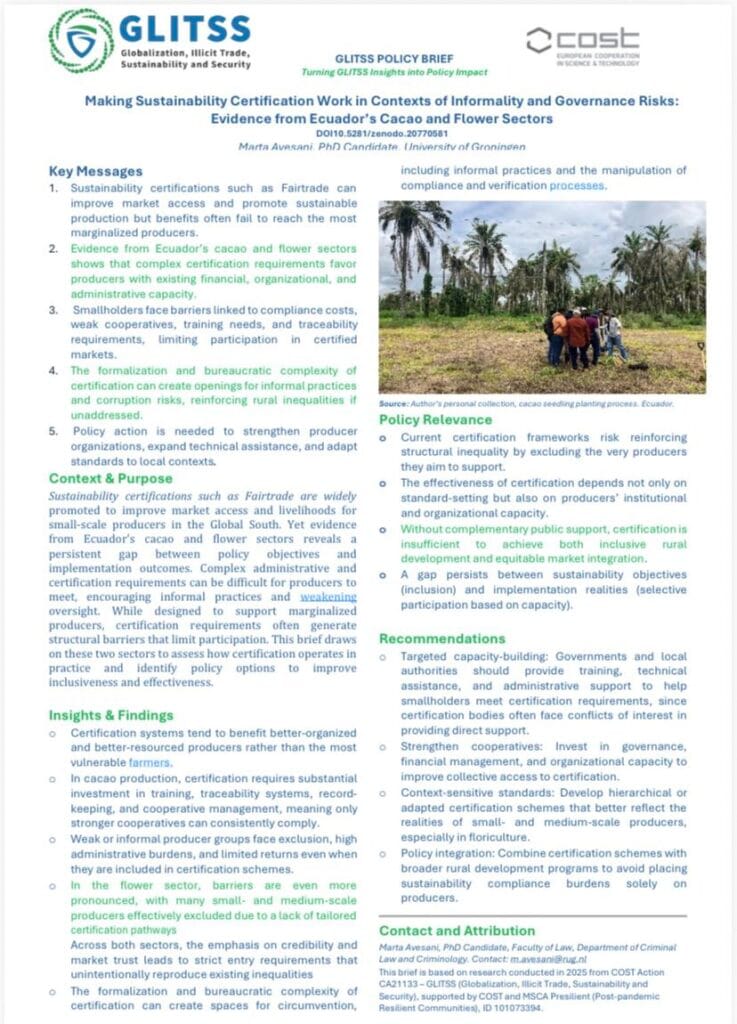
Sustainability certifications such as Fairtrade can improve market access and promote sustainable production but benefits often fail to reach the most marginalized producers.

Albania’s EU accession is a chance to improve patient access to medicines and build stronger regional cooperation. Three areas matter most for patients now: EMA approved medicines, not yet registered in Albania; responsible antibiotic use; and reliable vaccine supply.

